How Long Does Invisalign Take in Baner? Real Timelines by Case Type
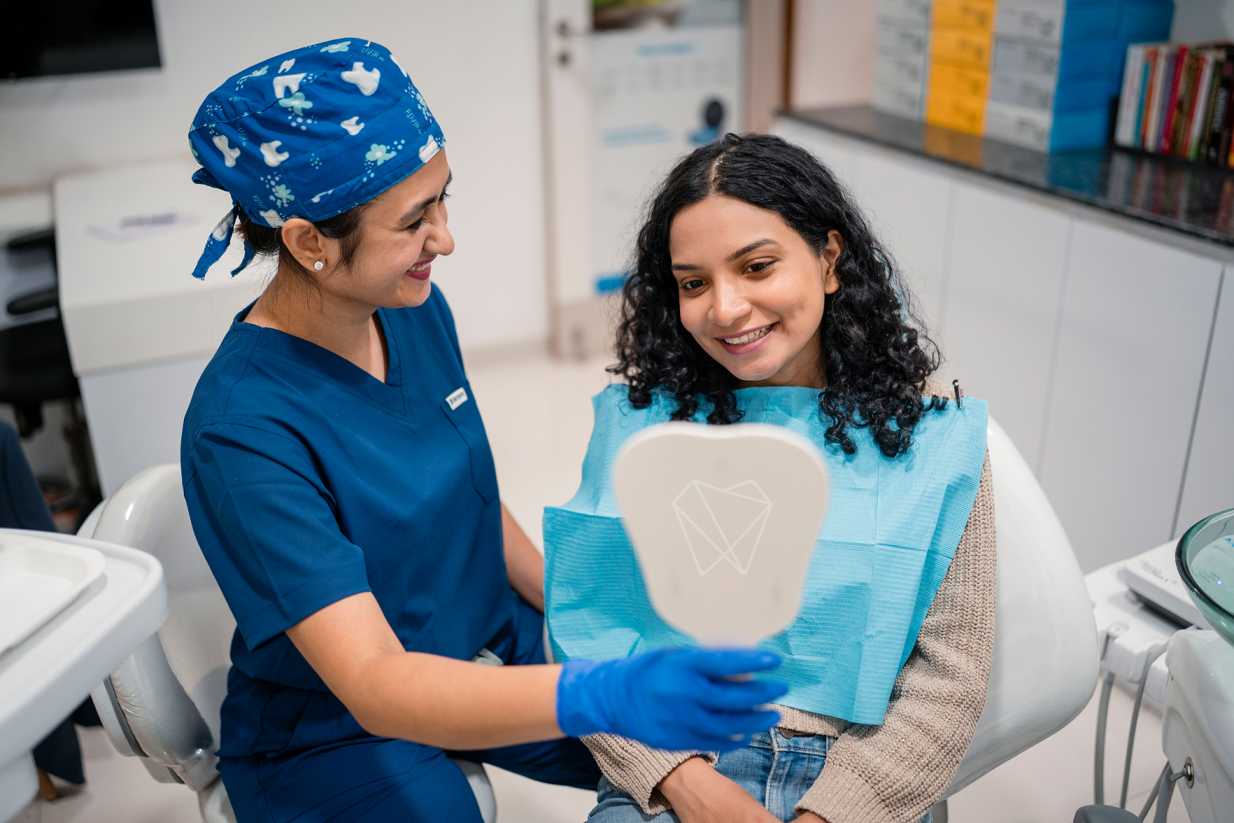
How long does Invisalign take? Most cases take 12–18 months, but published research puts the true average closer to 22.8 months — about five months longer than patients are told at their consultation. Minor corrections finish in 4–6 months. Full correction involving the bite commonly runs beyond two years. Your timeline is set by how far your teeth must travel and how consistently you wear the aligners.
This post gives you the honest version, including the numbers most clinics leave out.
What the research actually shows
A retrospective study of Invisalign patients published in the American Journal of Orthodontics and Dentofacial Orthopedics found some sobering figures (ScienceDirect):
| Measure | Finding |
|---|---|
| Average treatment length | 22.8 months |
| Longer than the estimate given at consultation | by 5.1 months |
| Average refinement scans needed | 2.5 |
| Patients finishing with no refinement at all | 6.0% |
| Patients who switched to braces partway | 17.2%, about 1 in 6 |
| Average total aligners, both arches | 64.1 |
By comparison, cases Align Technology publishes in its own global gallery average about 18 months (NCBI) — which tells you something about the difference between showcase cases and everyday ones.
We share these numbers because a patient who expects 12 months and finishes at 20 feels misled, even when the result is excellent. A patient who expects 18 and finishes at 16 is delighted.
How long does Invisalign take, by case type
| Your case | Typical aligners | Realistic duration |
|---|---|---|
| Minor relapse after childhood braces | 10–20 | 4–7 months |
| A single gap or mild crowding, one arch | 14–24 | 6–10 months |
| Moderate crowding, both arches | 30–45 | 10–16 months |
| Crowding plus mild bite correction | 45–65 | 15–22 months |
| Significant bite correction, or extractions needed | 65+ | 20–30 months |
| Teen Invisalign during growth | 30–50 | 12–20 months |
These are our working ranges at House of Tooth in Baner, and they include the refinement rounds most cases need. An estimate that excludes refinements is not a real estimate.
The five things that actually change your timeline
Wear time. Aligners must be in for 20–22 hours a day. This is the single largest variable and the only one fully in your control. At 14 hours a day your teeth still move, but slowly and not always as planned, and the plan stops matching reality.
Whether the bite has to change. Straightening teeth within an arch is relatively quick. Changing how the upper and lower jaws meet is not. Deep bites, open bites and crossbites add months.
Rotations. Rotating a round tooth, especially a canine or premolar, is among the slowest movements in orthodontics. Two patients with visually similar crowding can differ by six months on this alone.
Whether extractions are needed. Creating space by removing teeth adds time — typically three to four months — because the space then has to be closed in a controlled way.
Your biology. Bone remodels at different rates in different people. Adults generally move more slowly than teenagers. This is not something either of us can change.
What refinements are, and why nearly everyone needs one
A refinement is a fresh scan and a new short series of aligners, made once your teeth have moved most of the way. It corrects the gap between what was planned on screen and what the teeth actually did.
Only 6% of patients in the published study finished without one. So the honest framing is that refinements are part of the treatment, not a sign something went wrong. When a clinic tells you your case will need “about 30 aligners”, ask whether that includes the refinement series.
The stage nobody counts: retention
Treatment does not end when the last aligner comes out. Teeth move throughout life, and without retainers they drift back — often within months.
Retention is permanent, at reducing frequency: nightly at first, then a few nights a week indefinitely. Patients who come to us with relapse after childhood braces almost always stopped wearing their retainers. If you count retention honestly, orthodontic treatment does not have an end date; it has a maintenance phase.
Can Invisalign be made faster?
Some, but less than the advertising suggests.
Wearing aligners the full 22 hours is the real accelerator. Beyond that, some clinics offer accelerated protocols such as changing aligners every five days instead of seven in suitable cases, or adjunct devices intended to speed bone remodelling. Evidence for the devices is mixed, and they do not suit every case.
What genuinely saves time is accurate planning at the start. A case planned properly by an orthodontist, with attachments designed for the specific movements needed, spends less time in refinement at the end.
Cases from our Baner clinic
We publish real cases with their durations rather than only finished photographs:
- A 23-year-old with crowding and a rotated front tooth
- Closing a front-tooth gap with aligners
- A 14-year-old teen case
- Invisible braces for a child, completed in 10 months
More on our clear aligner treatment.
Frequently asked questions
How long does Invisalign take on average? Published research puts the average at 22.8 months across all case types. Most straightforward cases in our clinic run 12–18 months, and minor corrections finish in 4–7 months.
Why do clinics quote 12 months when research says 22.8? Because the initial estimate is generated from the digital plan before refinements are known. The same study found real treatment ran 5.1 months longer than the consultation estimate on average.
How many aligners will I need? The published average is 64.1 across both arches including refinements. Simple cases need 14–24; complex cases exceed 65.
Will I definitely need refinements? Almost certainly. Only 6% of patients in the study completed treatment without a refinement scan. Plan for one or two.
What happens if Invisalign is not working? About 1 in 6 patients in the published study switched to braces partway. It is not a failure — some movements are simply better achieved with fixed appliances, and a good orthodontist will say so early rather than persist.
Does Invisalign work faster than braces? Not reliably. For simple cases the two are comparable. For complex cases braces are often faster. The advantage of aligners is comfort and appearance, not speed.
What happens if I do not wear them for the full 22 hours? Treatment slows and teeth stop tracking the plan, which usually means more refinements. Consistent wear is the difference between finishing near the estimate and running well past it.
How long do I wear retainers? Indefinitely, at reducing frequency. Nightly at first, then several nights a week for life. This is true after any orthodontic treatment, braces included.
Can I speed it up by changing aligners early? Only on your orthodontist’s instruction. Changing early without the teeth having tracked causes aligners to fit poorly and generally costs time rather than saving it.
Is it too late to start Invisalign as an adult? No. Healthy teeth and gums move at any age. Adults are now the largest group of aligner patients in India. Treatment is typically somewhat slower than in teenagers.
Book a consultation
We will give you a realistic timeline for your specific case, including the refinement rounds, at your first visit.
House of Tooth, Lane No. 4, behind Balewadi High Street, Baner, Pune 411045. Open Monday to Saturday 10 am–8 pm, Sunday 10 am–7 pm. Call or WhatsApp +91 70196 02137, or book online.
About the author. Dr. Bhakti Halapanavar is a gold-medalist orthodontist, BDS, MDS (Orthodontics & Dentofacial Orthopedics) and an Invisalign-certified provider at House of Tooth, Baner, Pune.