Skip to content
Composite vs Porcelain Veneers: Which Is Right for You?
Composite vs porcelain veneers: composite veneers are built up directly on your teeth, often in one visit and with very little tooth preparation. Porcelain (ceramic) veneers are made in a lab, take a few visits, and give the most natural translucency, durability and stain resistance. Which is right for you depends on your teeth, what you want to change and how long you want the result to last.
Both are good treatments. The best choice is the one that suits your teeth, not the most expensive or the quickest one. Here is how they compare, with real cases from our clinic.
Not sure which one you need? WhatsApp us a photo of your smile on +91 70196 02137, and we’ll tell you what your teeth are likely to need.
What are composite veneers?
Composite is a tooth-coloured resin, the same family of material used for natural-looking fillings. For composite veneers, the dentist builds the material up layer by layer on the front of your teeth, then shapes and polishes it. Very little of your own tooth needs to be prepared, and the work is often done in a single visit.
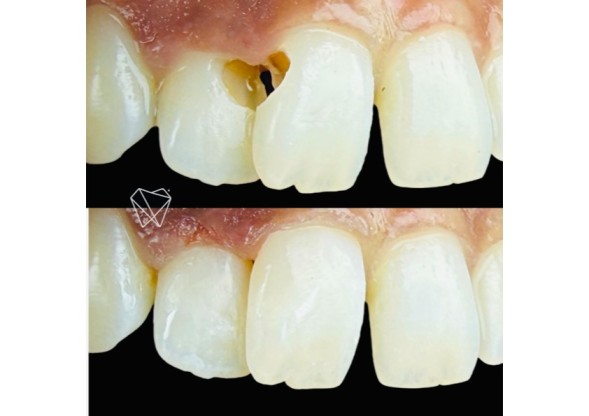
Composite is ideal for repairing small chips, closing small gaps and evening out a few teeth quickly. For example, we closed a gap between the front teeth with composite veneers in one appointment.
What are porcelain veneers?
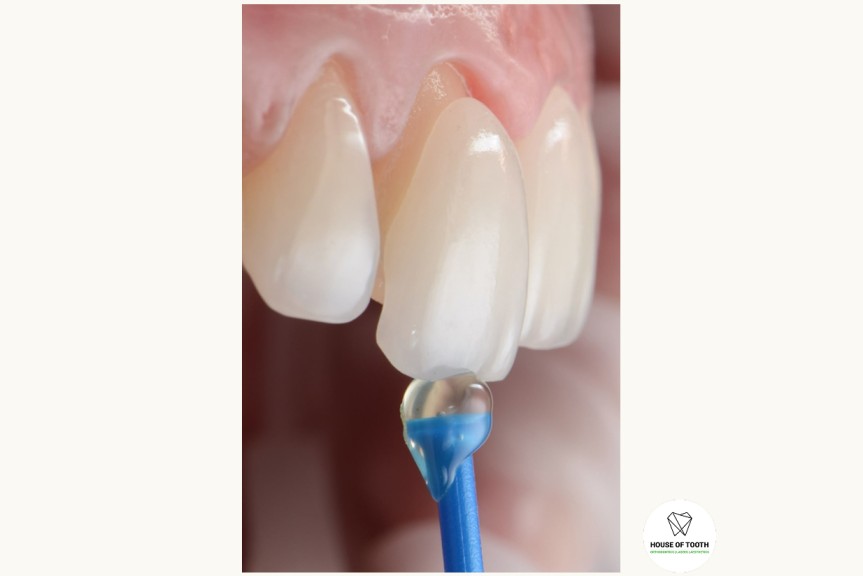
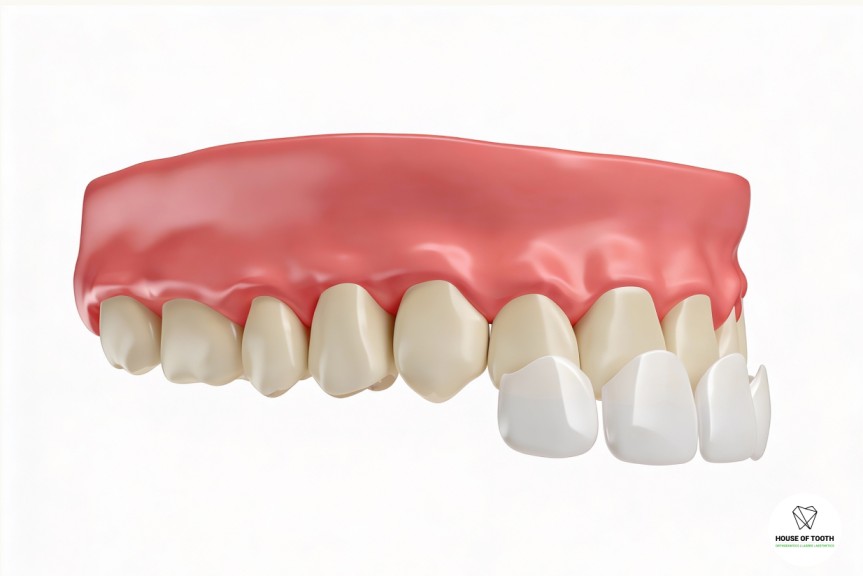
Porcelain veneers are thin ceramic shells made in a dental lab and bonded to the front of your teeth. At our clinic we often use E-max, a strong type of ceramic. A thin layer of enamel is reshaped first so the veneers sit naturally, and treatment takes a few visits: planning, preparation and fitting.
Ceramic reflects light much like natural enamel, so porcelain veneers look very lifelike. They also resist staining well, which makes them a good choice for dark or discoloured teeth. In one case, we fitted four porcelain veneers for a broken front tooth in 4 days.
Composite vs porcelain veneers at a glance
| Composite veneers | Porcelain (ceramic) veneers | |
|---|---|---|
| How they are made | Built up directly on your teeth | Made in a dental lab |
| Visits | Often one | A few |
| Tooth preparation | Very little, sometimes none | A thin layer of enamel |
| Look | Natural, polished by hand | Most lifelike, natural translucency |
| Staining | Can pick up stains over time | Resists staining well |
| If one chips | Usually repaired in the clinic | Usually a new veneer |
| Lifespan | Many years; needs more upkeep | Usually the longest-lasting option |
| Best for | Small chips, small gaps, quick changes | Colour, shape and size changes together |
Which looks more natural?
Both can look natural in skilled hands. Composite can be shaded and polished to blend with your teeth, and it suits small changes very well. Porcelain has a slight edge for big changes, especially when you want to change the colour of a dark tooth or make several teeth whiter together. For example, porcelain helped us match a yellow, discoloured front tooth to the rest of the smile.
Which lasts longer?
With good care, both can last many years. However, composite is softer than ceramic. It can pick up stains from tea, coffee and smoking, and its edges can chip. It usually needs polishing at check-ups and small repairs over time. The good news is that composite is easy to repair in the clinic.
Porcelain is harder and more stain resistant, so it usually lasts longer before it needs replacing. If a porcelain veneer does break, it is normally replaced rather than repaired.
Do veneers damage your teeth?
Composite veneers need very little preparation, and sometimes none, so they are the most conservative option. Porcelain veneers need a thin layer of enamel to be reshaped. That enamel does not grow back, so porcelain veneers are a long-term choice: the tooth will always need a veneer or another restoration.
That is why we always check your teeth and gums first, plan your smile with you, and recommend the simplest option that will give you the result you want.
Which should you choose?
Composite veneers are often the better choice if:
- you want to fix a small chip or close a small gap;
- you want little or no change to your natural tooth;
- you want the result in one visit;
- you are happy to come for polishing and small touch-ups.
Porcelain veneers are often the better choice if:
- a tooth is dark or discoloured from the inside;
- you want to change colour, shape and size together;
- you want the longest-lasting, most stain-resistant result;
- you are planning a full smile makeover.
If your teeth are crooked, straightening them first with Invisalign or braces may mean fewer veneers, or none at all. Read veneers vs teeth whitening vs braces to compare. If you grind your teeth, tell us, because a night guard helps protect any veneer.
Real veneer results at House of Tooth
How to look after your veneers
- Brush twice a day and clean between your teeth daily.
- Come for regular check-ups and professional cleaning.
- Avoid biting hard objects such as pens, ice or nutshells with your front teeth.
- Wear a night guard if you grind your teeth.
- With composite, rinse after tea or coffee, and ask us to polish your veneers at check-ups.
Book a veneers consultation in Baner
At your consultation we check your teeth, gums and bite, talk about what you want to change, and explain whether composite or porcelain veneers suit you. Where helpful, we show you a smile preview before treatment. Our guide to dental veneers in Pune covers the basics.
House of Tooth is at Lane No. 4, behind Balewadi High Street, Baner, Pune 411045. We are open Monday to Saturday 10 am – 8 pm and Sunday 10 am – 7 pm. Read what patients say in our Google reviews.
Call or WhatsApp us on +91 70196 02137, or book online. See cosmetic dentistry in Baner at House of Tooth.
About the author. Dr. Aniket Kasodekar is BDS, MDS with a Fellowship in Lasers, and leads House of Tooth in Baner, Pune.