Skip to content
 Dental Emergency in Baner: What to Do Before You Reach a Dentist
In a dental emergency, what you do in the first hour often decides the outcome. A knocked-out adult tooth can frequently be saved if it’s back in the socket within 30 minutes. Facial swelling that’s spreading is genuinely urgent. And a fair number of things that feel like emergencies at 2 am can safely wait until morning.
This is the short version of what we tell people who call us.
A knocked-out adult tooth
This is the one where minutes matter, so it’s first.
- Find the tooth and pick it up by the crown — the chewing part. Don’t touch the root.
- If it’s dirty, rinse it for a few seconds in milk, saline, or the patient’s own saliva. Never scrub it, and never use soap or antiseptic. The cells on the root surface are what let it reattach, and scrubbing kills them.
- Put it back in the socket if you can manage it — right way round, gentle steady pressure, then bite softly on a clean cloth to hold it.
- If you can’t reimplant it, keep it wet. Milk is the best thing most kitchens have. Saliva works — hold it in the cheek if the person is old enough not to swallow it. Plain water is the worst option because it damages the root cells, but wet is still better than dry.
- Get to a dentist immediately. Under 30 minutes is very good. Under an hour is realistic. After a few hours the odds drop a lot.
Baby teeth are the exception — don’t put a knocked-out baby tooth back. Reimplanting it risks damaging the permanent tooth developing above it. Take your child to be seen, but leave the tooth out.
Swelling — the one people underestimate
Most toothache isn’t dangerous. Spreading facial swelling is.
Go to a hospital, not a dental clinic, if there’s swelling and any of these:
- It’s closing the eye, or spreading down into the neck
- Difficulty swallowing, breathing, or opening the mouth
- Fever with the swelling
- The floor of the mouth feels raised or firm
That combination can compromise an airway, and it needs a hospital that can manage it. This is rare, but it’s the reason we’d rather you called at 11 pm than waited politely until morning.
Swelling confined to the gum around one tooth, without those signs, needs seeing soon — but it isn’t a middle-of-the-night hospital trip.
Cracked or broken tooth
Rinse with warm water. If there’s bleeding, press a clean gauze on it. Use a cold compress on the outside of the cheek for swelling.
Keep any pieces that broke off, in milk — sometimes a fragment can be bonded back on, and it’s the best colour match you’ll ever get.
A crack that’s painful when you bite down and release usually means the crack runs into the dentine or pulp. That needs seeing soon, because a tooth that’s cracked but still intact is much easier to save than one that splits.
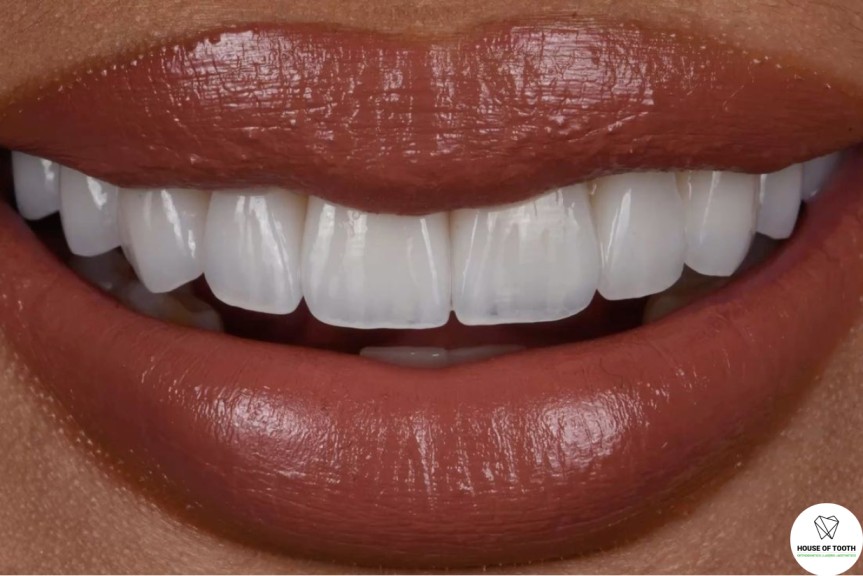
We’ve documented a fractured front tooth rebuilt with a root canal and an Emax crown.
Severe toothache
Take an ordinary painkiller you normally tolerate. Rinse with warm salt water. Keep your head elevated at night — lying flat raises the pressure in the tooth, which is why toothache is so reliably worse at 3 am.
Two things to avoid, both of which we see regularly:
- Don’t put aspirin on the gum. It burns the tissue and doesn’t help the tooth. Painkillers work through your bloodstream, not by contact.
- Don’t apply heat to a swollen face. Heat encourages infection to spread. Cold, not hot.
Pain that keeps you awake, wakes you up, or lingers for more than a few seconds after something cold usually means the nerve is inflamed or dying. That’s a root canal question, and putting it off generally turns a straightforward appointment into a complicated one.
Our root canal treatment is laser-assisted, which is a large part of why our patients describe it the way they do.
What can wait until morning
- A lost filling or crown with no real pain — keep the crown, avoid chewing there
- A chip with no pain and no sharp edge cutting your tongue
- Mild sensitivity to cold that settles in a second or two
- A broken denture or a bracket that’s come loose but isn’t poking you
- Food packing between teeth, once you’ve got it out
For a lost crown, don’t try to glue it back with household adhesive. We’ll have to get it off again, and that’s usually harder than re-cementing it properly.
What to have ready when you call
It makes a real difference to how fast we can help:
| Tell us | Why |
|---|---|
| What happened and when | A tooth out for 20 minutes is a different call from one out for 6 hours |
| Whether there’s swelling, and where | Separates urgent from very urgent |
| Fever, or trouble swallowing or breathing | Sends you to a hospital rather than to us |
| Which tooth, roughly | Lets us plan before you arrive |
| Medical conditions and medications | Blood thinners, diabetes and heart conditions change the approach |
Reaching us
We’re open seven days — Monday to Saturday 10 am to 8 pm, and Sunday 10 am to 7 pm — which covers more of the week than most clinics in Baner. Call or WhatsApp +91 70196 02137.
If it’s outside those hours and it’s the airway-type swelling described above, go straight to a hospital emergency department. Don’t wait for us to open.
Frequently asked questions
What counts as a dental emergency? A knocked-out adult tooth, spreading facial swelling, uncontrolled bleeding, a fractured tooth with severe pain, or a tooth pushed out of position after an injury.
Can a knocked-out tooth be saved? Often, if it’s reimplanted within about 30 minutes and kept moist. Store it in milk if you can’t put it back, never in plain water for long, and never let it dry out.
Should I go to a hospital or a dentist? A dentist for most things. A hospital if there’s spreading swelling, difficulty breathing or swallowing, fever with swelling, or a facial injury that may involve a fracture.
Is a dental abscess dangerous? It can be. A localised abscess is uncomfortable but manageable; an infection spreading into the face or neck is a medical emergency. Swelling that’s growing hour by hour needs same-day care.
Will antibiotics fix a toothache? Not on their own. Antibiotics can settle an infection temporarily, but the cause — usually an infected nerve — still needs treating. Pain often returns once the course ends.
What if my child knocks out a baby tooth? Don’t put it back. Control the bleeding with gentle pressure and bring them in to check the socket and the permanent tooth developing underneath.
My crown fell off — is that an emergency? Usually not. Keep the crown, avoid chewing on that side, and see us in the next few days. Don’t use household glue.
Why is toothache always worse at night? Lying flat increases blood pressure in the head, which raises pressure inside an inflamed tooth. There are also fewer distractions. Propping yourself up genuinely helps.
Can I take painkillers before coming in? Yes — take what you’d normally take, and tell us what and when. It doesn’t stop us treating you, and being in less pain makes the appointment easier.
In pain now?
Call or WhatsApp +91 70196 02137. We’ll tell you honestly whether you need to come in now, come in tomorrow, or go to a hospital.
House of Tooth, Lane No. 4, behind Balewadi High Street, Baner, Pune 411045. Open Monday to Saturday 10 am – 8 pm, Sunday 10 am – 7 pm.
About the author. Dr. Aniket Kasodekar is BDS, MDS with a Fellowship in Lasers and leads House of Tooth in Baner, Pune.
This article is general information, not a substitute for being examined. If you have swelling with difficulty breathing or swallowing, go to a hospital emergency department.