How Many Dental Implants Are Needed to Replace All Your Teeth?
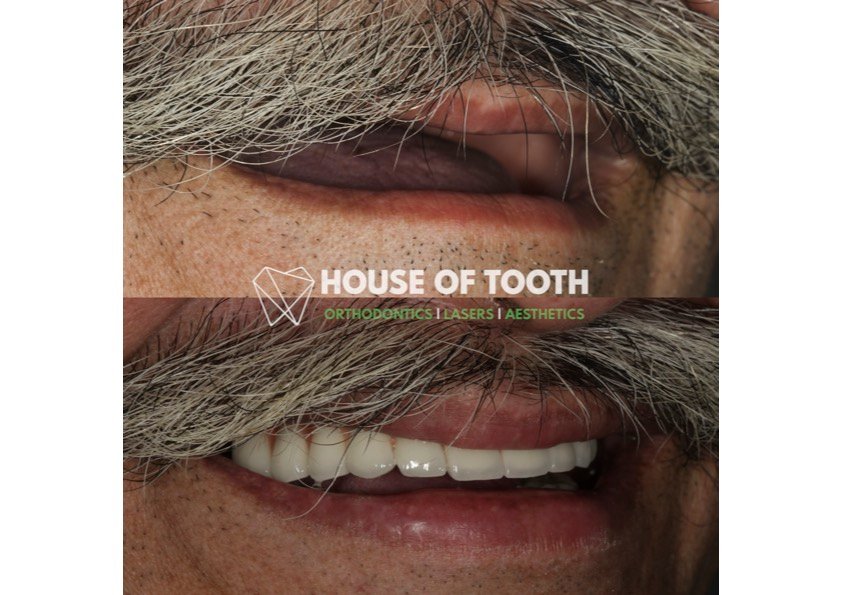
If you’re missing most or all of your teeth, you may assume that replacing every tooth means getting one dental implant for every missing tooth. Fortunately, that’s usually not the case. Depending on your bone, bite, gum health and treatment plan, a complete arch of replacement teeth can often be supported by a smaller number of strategically positioned implants. This is why modern full mouth teeth replacement can be more practical than many patients initially imagine.
Is It Four, Six, or More Implants?
The number of implants required depends on the individual case. All-on-4 dental implants, for example, use four strategically positioned implants to support a fixed replacement arch in suitable patients. Other patients may benefit from six implants or a different full-arch design depending on available bone, bite forces and the type of final teeth being planned.
There isn’t a universal number that is best for everyone. Your dentist needs to evaluate your jaw and overall oral condition before deciding how many implants will provide appropriate support.
Seeing advertisements for “four implants for a full set of teeth” can make treatment seem very straightforward, but implant dentistry is not one-size-fits-all. Bone volume and density, previous infections, gum health, jaw anatomy, bite and the design of the replacement teeth all influence treatment planning.
A detailed examination and CBCT scan can help your implant dentist understand the available bone and identify the safest and most predictable way to restore your teeth. In some patients, additional procedures such as bone grafting may also be considered.
What Happens During Full Mouth Implant Planning?
Before starting full mouth dental implants, your dentist will assess your remaining teeth, gums, jawbone, bite and facial aesthetics. Digital scans and 3D imaging can then be used to plan implant positions and design the replacement teeth.
At House of Tooth, we focus on planning the entire treatment rather than simply placing implants. Our team evaluates function, aesthetics, bite and long-term maintenance so that your replacement teeth are designed to work comfortably and look natural. This detailed planning is especially important when multiple teeth are being replaced.
Can You Get Fixed Teeth on the Same Day?
In selected cases, patients may be able to receive temporary fixed teeth on the day of implant surgery. However, this is not suitable for every patient. Immediate loading depends on factors such as implant stability, bone quality, infection, bite forces and the planned restoration.
The final replacement teeth are usually planned separately and are provided after the appropriate healing and treatment stages. Your dentist will explain the expected timeline after assessing your individual case.
FAQ
Can four dental implants replace all my teeth?
In selected cases, four strategically positioned implants can support a fixed full-arch restoration. Whether this is suitable depends on your bone, bite, anatomy and overall treatment plan.
How many implants are needed for a full mouth?
There is no single number for everyone. Depending on the treatment design, a full arch may be supported by four, six or more implants.
Is All-on-4 the same as full mouth dental implants?
Not exactly. All-on-4 is one specific approach to full-arch implant treatment, while “full mouth dental implants” is a broader term covering different ways of replacing an entire arch or both arches.
Can I get fixed teeth if I have very little bone?
Possibly. Some patients with reduced bone may still have implant options, but additional procedures or a different implant strategy may be required. A CBCT scan is important for evaluating this.
How do I know which full mouth implant option is right for me?
Your dentist will consider your bone levels, gum health, remaining teeth, bite, facial aesthetics, general health and treatment expectations before recommending an implant plan.