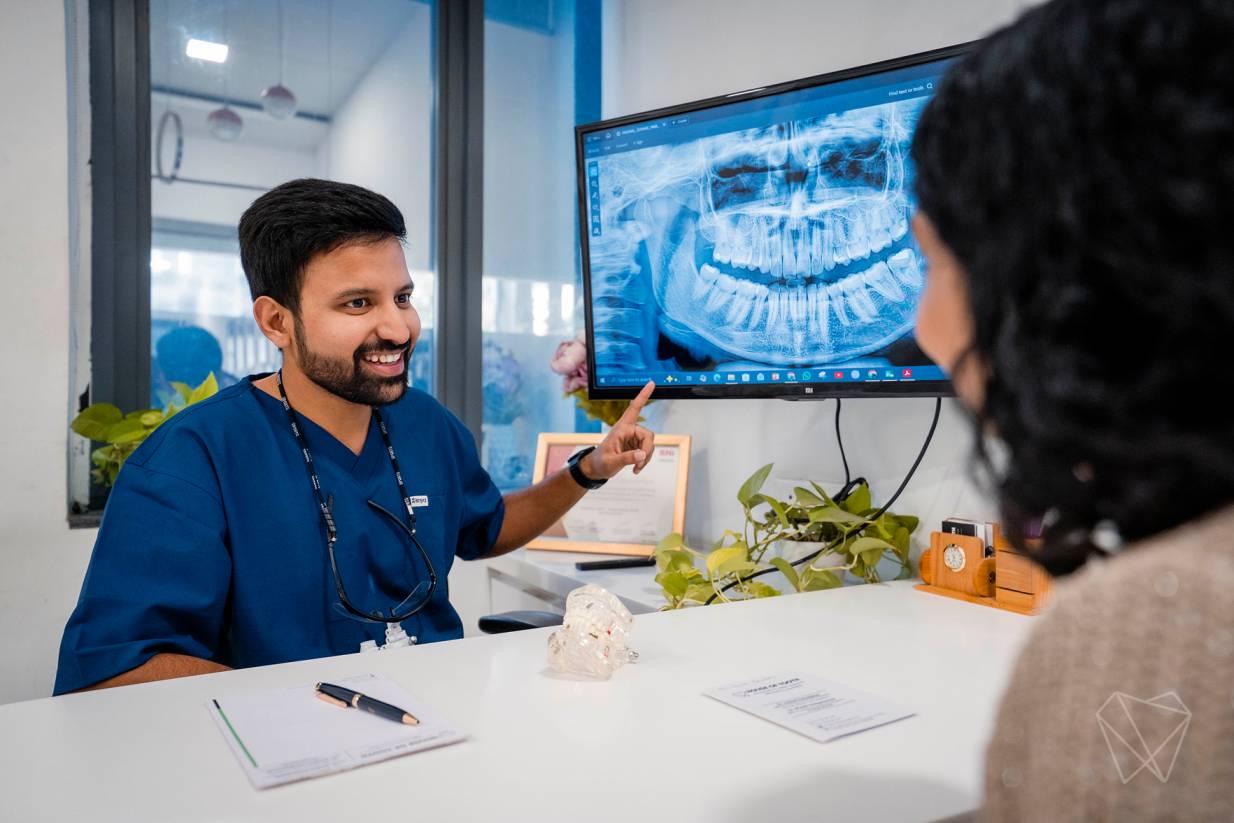
Bleeding gums and gum disease · Baner, Pune

Gum Treatment in Baner, Pune

Bleeding gums are common, but they are not normal. First, we measure your gums and check the bone on an X-ray. Then we treat the cause, from a professional clean to deep cleaning with lasers, to help you keep your natural teeth.
  • Gum measurements and X-rays
  • Deep cleaning (scaling and root planing)
  • Lasers used alongside to clean gum pockets
  • Maintenance plan to keep gums healthy
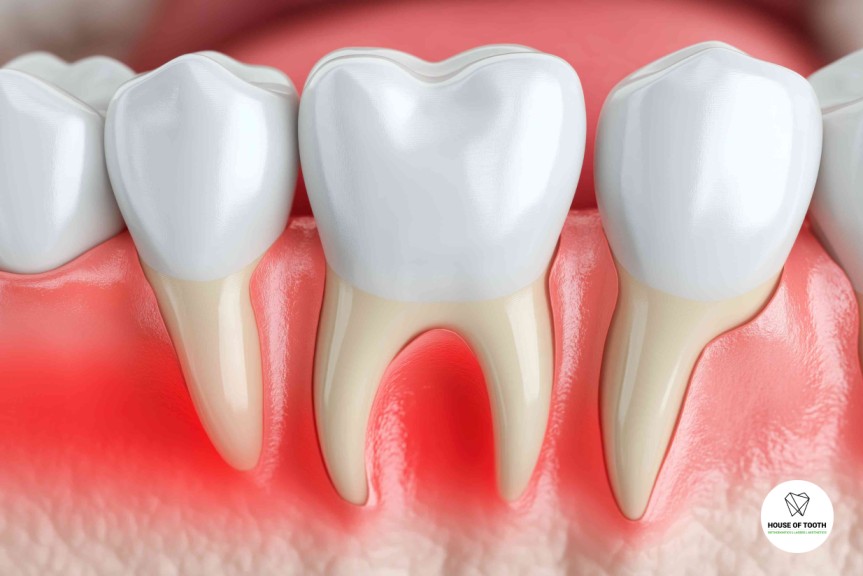
Inflamed gums illustration, gum treatment at House of Tooth, Baner

Why gums bleed

Gingivitis or periodontitis?

In most people, bleeding comes from plaque along the gumline. Caught early, it reverses. However, left alone, it can damage the bone that holds your teeth.

Early stage

Gingivitis: reversible

Plaque makes the gums swell, turn red and bleed when you brush. Usually, two weeks of proper brushing and cleaning between the teeth fixes it. Also, a professional clean removes any tartar.

Later stage

Periodontitis: needs treatment

Plaque hardens into tartar under the gumline, and the body starts breaking down the bone around the teeth. We can stop it, but lost bone does not grow back. It is often painless until it is advanced, so bleeding may be your only warning.

Gum treatments

Treatment for every stage

Treatment depends on the stage: a professional clean for gingivitis, deep cleaning for periodontitis, and surgery only for advanced cases.

Scaling and root planing

Non-surgical deep cleaning that removes plaque and tartar from below the gumline to reduce pocket depth.

Laser periodontal therapy

Dental lasers used to decontaminate gum pockets and help the tissue heal.

Flap surgery

Surgical access to the root surfaces and bone for thorough cleaning in advanced periodontitis.

Gingival grafting

A procedure to treat receding gums and protect exposed root surfaces.

When to see us

Signs your gums need a check

Book a check if

  • Your gums still bleed after two weeks of good cleaning
  • Your gums look like they are shrinking back
  • You have a bad taste or bad breath that keeps coming back
  • A tooth feels slightly loose or has moved
  • There is swelling or pus around a tooth: don’t wait on this one

Good to know

  • Smokers often bleed less, but the disease can still be progressing
  • Diabetes makes gum disease worse; also, gum disease makes blood sugar harder to control
  • Pregnancy makes gums more reactive; a cleaning is safe and a good idea
  • Some medicines, such as blood thinners, can affect the gums

How it works

Your gum treatment, step by step

Step 1

Measuring

First, we gently measure the space between each tooth and the gum; 1–3 mm is healthy.

Step 2

X-rays

Then we usually take X-rays to see the level of the bone around your teeth.

Step 3

Cleaning

For gingivitis, a professional clean; for periodontitis, deep cleaning over a couple of visits, with the area numbed.

Step 4

Lasers

We use lasers alongside deep cleaning to decontaminate the pockets and settle the gums.

Step 5

Maintenance

After that, regular cleans, often every three to four months, keep the problem under control.

Helpful guides

Learn more about your gums

Every mouth is different, so we recommend treatment only after measuring your gums.

Gum care at House of Tooth: Bleeding gums when you brush

Bleeding gums when you brush

Why it happens, what to fix at home and when to worry.

Gum care at House of Tooth: Bad breath

Bad breath

The common causes, including gum disease, and how to fix them.

Gum care at House of Tooth: Lost a tooth to gum disease?

Lost a tooth to gum disease?

Healthy gums come first; then implants can replace missing teeth.

Reception at House of Tooth dental clinic, Baner

Who will treat you

Your House of Tooth dental team

Our dental team looks after gum health at House of Tooth, from the first measurements to your maintenance visits. They also explain what they find and what each treatment involves. The clinic is led by Dr. Aniket Kasodekar and Dr. Bhakti Halapanavar and works with specialists in each field.

At home

Healthy gums: do’s and don’ts

Do

  • Brush twice a day for two full minutes, angled gently into the gumline, with soft bristles
  • Clean between your teeth once a day with floss or interdental brushes
  • Keep cleaning areas that bleed; the bleeding settles as the inflammation does
  • Use a fluoride toothpaste, then spit, don’t rinse
  • Clean your tongue every morning
  • Keep your maintenance visits, often every three to four months after gum disease

Don’t

  • Don’t scrub harder or avoid the area when gums bleed
  • Don’t skip cleaning between your teeth
  • Don’t rely on mouthwash alone; it can’t remove tartar
  • Don’t smoke
  • Don’t ignore loose teeth, shrinking gums or swelling

Questions patients ask

Gum treatment FAQs

No. It is common, but it isn’t normal. In other words, bleeding means inflammation, usually from plaque along the gumline.
Gingivitis will, with two weeks of proper brushing and cleaning between the teeth. However, periodontitis won’t: it needs tartar removed from below the gumline. Bleeding gums guide
No, that is the opposite of what helps. Instead, clean it gently and thoroughly, because the bleeding settles within a few days as the inflammation does.
Deep cleaning of the root surfaces below the gumline to remove plaque and tartar. We usually do it over a couple of visits with the area numbed. We also use lasers alongside it to decontaminate the pockets.
We numb the area for deep cleaning. In our experience, using lasers alongside it makes the days afterwards much more comfortable.
Bone lost to periodontitis does not grow back, but treatment stops the damage. However, receding gums can sometimes be treated with gingival grafting to protect exposed roots.
It helps, but it won’t do the job alone. That’s because mouthwash can’t remove plaque that is already stuck to the teeth, and it can’t touch tartar.
Often, yes. Bacteria in deep gum pockets produce strong-smelling gases that mints don’t cover for long. Bad breath guide
Yes. Gum disease makes blood sugar harder to control, so treating your gums helps more than your teeth. Also, in pregnancy, gums react more to plaque, and a cleaning is safe and a good idea.
Book a gum check using the calendar below, or WhatsApp or call us. Then we will measure your gums, check the bone on an X-ray if needed and explain what we find.

Book your consultation

Book a gum check

Choose a day and time that suits you. We will measure your gums and explain what we find. Prefer to talk first? WhatsApp or call us.

Loading available times…