Skip to content
Deep Cleaning Teeth: What Scaling and Root Planing Involves
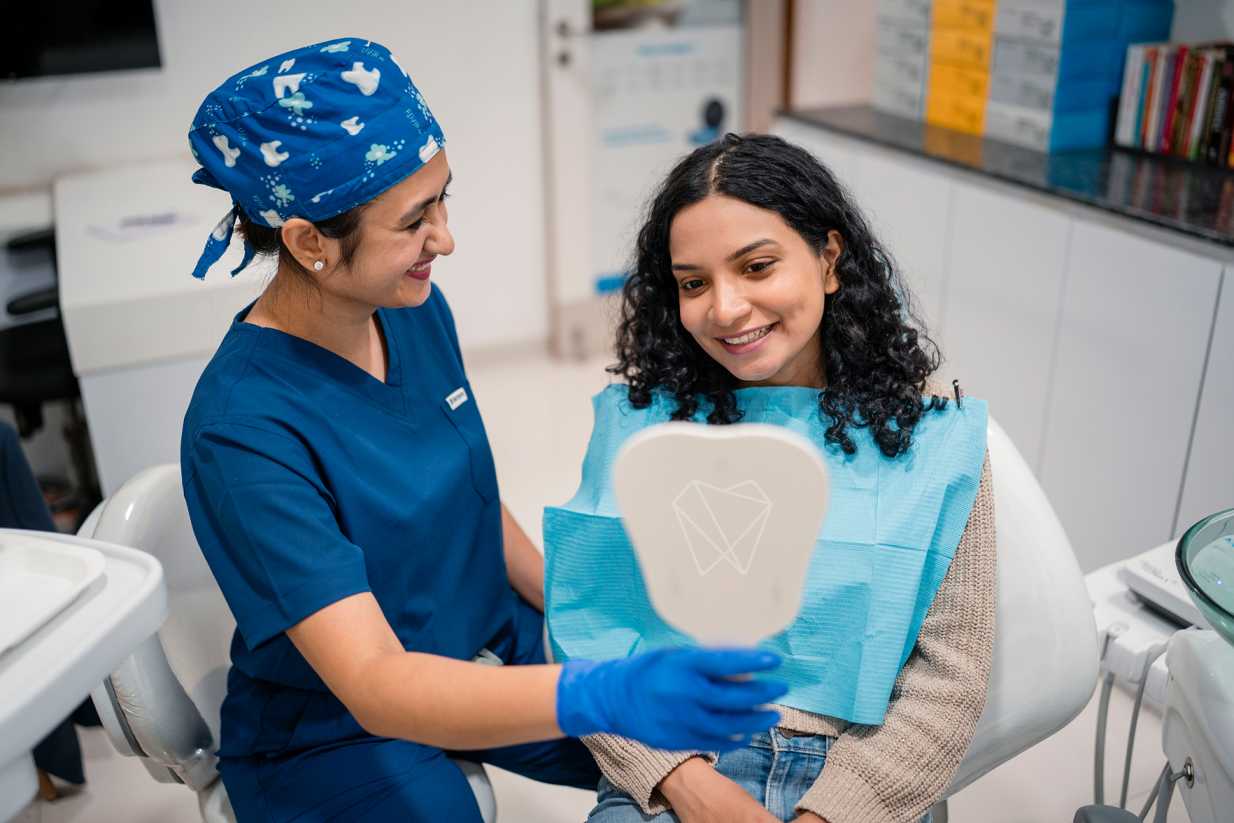
Deep cleaning teeth, also called scaling and root planing, cleans below the gumline, where a regular clean can’t reach. It is the main treatment for gum disease (periodontitis). At House of Tooth, we usually do it over a couple of visits, with the area numbed, and use lasers alongside it.
Many patients are surprised when a dentist recommends a “deep cleaning” instead of a normal one. So here is what it means, why it’s needed, and what to expect.
Regular cleaning vs deep cleaning
A regular cleaning (often just called “scaling” in India) removes plaque and tartar from the teeth above and just at the gumline. It suits healthy gums and mild gum inflammation (gingivitis). See a teeth cleaning before and after from our clinic.
A deep cleaning goes further. When gum disease has progressed, the gums pull away from the teeth and form deeper pockets. Tartar and bacteria collect inside these pockets, out of reach of your toothbrush. Deep cleaning removes them from the root surfaces below the gumline.
| Regular cleaning | Deep cleaning | |
|---|---|---|
| Where it cleans | Above and at the gumline | Below the gumline, on the roots |
| Who needs it | Healthy gums or gingivitis | Gum disease with deeper pockets |
| Numbing | Usually not needed | The area is numbed |
| Visits | Usually one | Usually a couple of visits |
Signs you may need a deep cleaning
- gums that bleed when you brush or floss;
- red, swollen or tender gums;
- bad breath that keeps coming back;
- gums that look like they are shrinking, making teeth look longer;
- teeth that feel loose or have started to move.
Bleeding gums are common, but they are not normal. Read more in bleeding gums when you brush.
How we decide if you need it
First, we measure the depth of the space between each tooth and the gum with a fine instrument. Then we check the bone around your teeth on an X-ray. Together, these show whether you have gingivitis, which needs a professional clean, or periodontitis, which needs deep cleaning.
What happens during a deep cleaning
- Numbing. We numb the area so you stay comfortable.
- Scaling. We remove plaque and tartar from the tooth and root surfaces below the gumline.
- Root planing. We smooth the roots, so bacteria have fewer places to stick and the gums can settle.
- Laser therapy. We use lasers alongside deep cleaning to decontaminate the pockets.
In our experience, using lasers alongside it makes the days afterwards much more comfortable.
After a deep cleaning
- Your gums may feel tender for a few days. Soft food helps.
- Your teeth may feel more sensitive to cold for a while.
- Keep brushing gently twice a day, and clean between your teeth as we show you.
- Come back for your review, so we can check how your gums are healing.
Can lost gum and bone grow back?
Bone lost to gum disease does not grow back. However, treatment stops the damage, which helps you keep your natural teeth. Receding gums can sometimes be treated with gum grafting to protect exposed roots.
Keeping gums healthy afterwards
Gum disease can return if plaque builds up again. So regular maintenance visits are an important part of treatment. At home, brush twice a day, clean between your teeth daily, and avoid smoking.
If you have diabetes or are pregnant, it’s especially worth having your gums checked, because gum health and general health affect each other.
Book a gum check
If your gums bleed, feel sore or look different, book a gum check. We will measure your gums, explain what we find, and suggest the right cleaning for you.
House of Tooth, Lane No. 4, behind Balewadi High Street, Baner, Pune 411045. Open Monday to Saturday 10 am – 8 pm, Sunday 10 am – 7 pm. Call or WhatsApp +91 70196 02137, or book online. See gum treatment at House of Tooth.
About the author. Dr. Aniket Kasodekar is BDS, MDS with a Fellowship in Lasers, and leads House of Tooth in Baner, Pune.