Skip to content
 Retainers After Braces: How Long Do You Need to Wear Them?

The honest answer is: for as long as you want your teeth to stay straight. Retainers after braces or Invisalign aren’t an optional extra. They’re the second half of treatment. Teeth that have just been moved will try to drift back, and they keep a tendency to shift for the rest of your life.
That sounds like a lot. In practice it usually means full-time wear for a few months, then wearing a retainer while you sleep. Here’s why, and how to make it easy.
Why teeth move back after braces
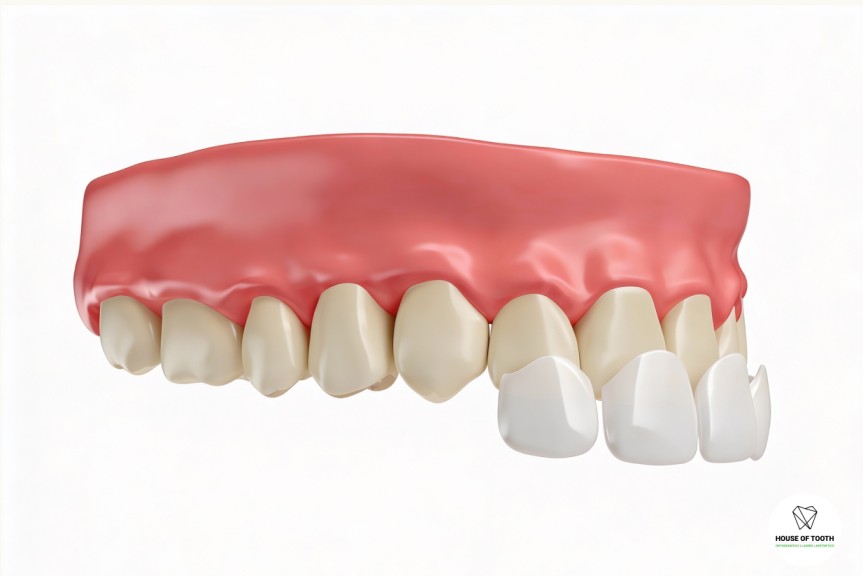
Teeth sit in bone, held in place by tiny fibres that connect each root to the bone around it. When braces move a tooth, those fibres stretch. Some of them, especially the ones around the neck of the tooth, take many months to settle into the new position. Until they do, they pull the tooth back toward where it started.
Even after that, teeth don’t stay still. Everyone’s teeth shift slowly throughout life, whether they’ve had braces or not. Lower front teeth in particular tend to crowd as we get older. A retainer holds them where your orthodontist put them.
How long to wear retainers after braces
Every orthodontist has a slightly different routine, and yours will depend on how your teeth were moved. A typical plan looks like this:
| Stage | How much to wear it |
|---|---|
| First 3–6 months after braces come off | Full time, about 22 hours a day. Out only to eat and brush |
| After that | Every night while you sleep |
| Long term | Nights, indefinitely. Some people can drop to a few nights a week if the teeth stay stable |
The early months matter most. This is when teeth move back fastest if the retainer stays in its case.
A simple test for later: if your removable retainer feels tight when you put it in, your teeth were starting to move. Wear it more often. If it slides in easily every time, your routine is working.
Fixed or removable retainers?
There are two main types, and many patients have one of each.
Fixed (bonded) retainers are a thin wire glued to the back of the front teeth. You can’t see them from the front, and you can’t forget to wear them. They need careful cleaning, because plaque and tartar collect around the wire. You’ll need to floss under it with a floss threader or use small interdental brushes. Check-ups matter, because a wire can come unstuck from one tooth without you noticing.
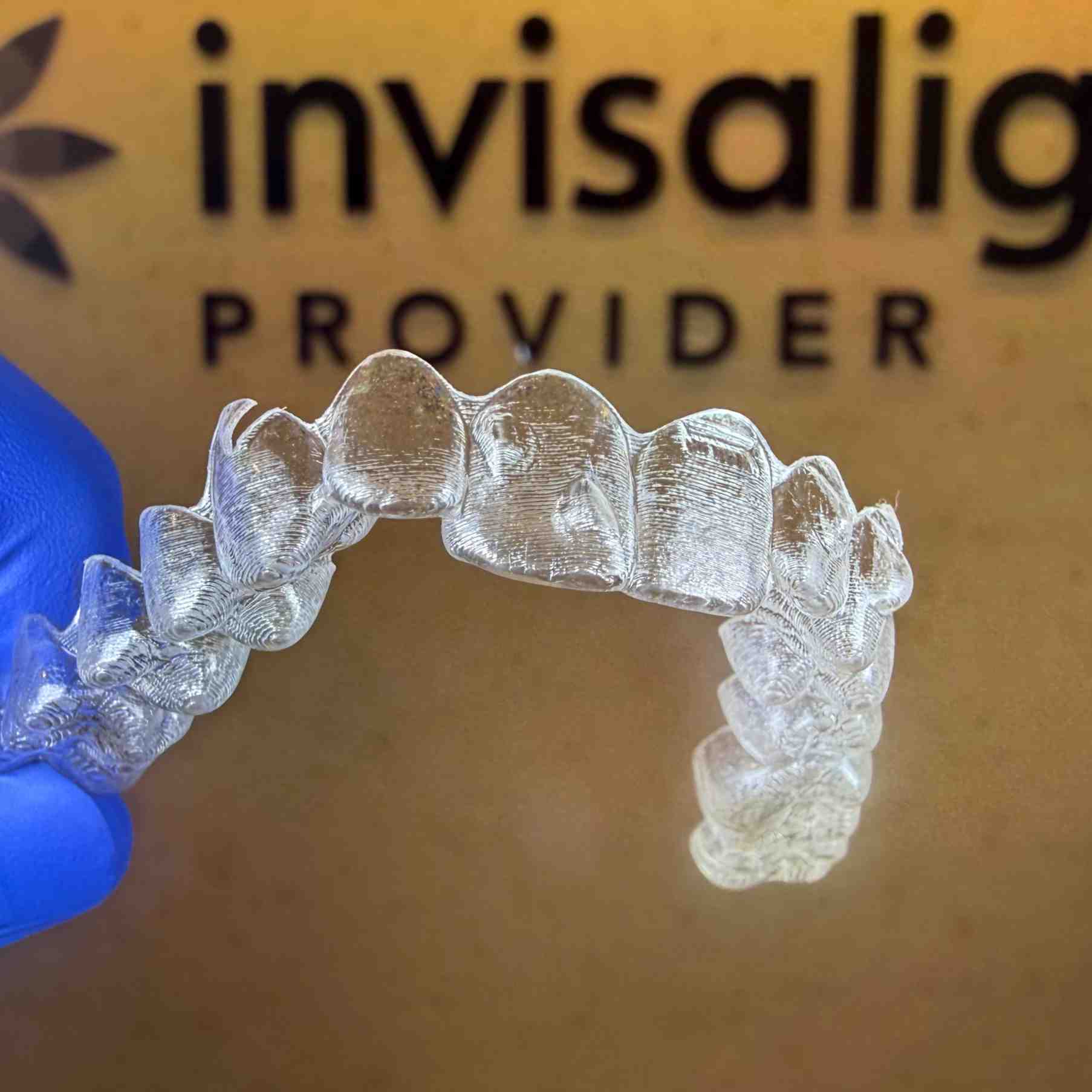
Removable retainers are usually clear plastic trays, a bit like an aligner. They’re easy to clean and you can take them out to eat. The catch is that they only work when they’re in your mouth.
| Fixed | Removable | |
|---|---|---|
| Remembering to wear it | Not needed | Every night |
| Cleaning | Harder, needs threaders or brushes | Easy |
| Visible | No | Barely, and only when worn |
| Main risk | Wire comes loose unnoticed | Lost, broken, or left in a drawer |
We’ll recommend what suits your teeth and your habits. If your front teeth were very crowded or had gaps, a fixed retainer is often a good idea, sometimes with a removable one on top for extra security.
Is it different after Invisalign?
No. Teeth moved with clear aligners relapse exactly the same way as teeth moved with braces. Your retainer plan will look much the same. If you’re still in treatment, our post on how long Invisalign takes explains the stages before you get to this point.
Looking after your retainer
- Clean it every day. Brush it gently with a soft toothbrush and cool water. Plain soap is fine. Toothpaste is slightly abrasive and scratches clear retainers, making them cloudy.
- Never use hot water. It warps the plastic, and a warped retainer doesn’t fit.
- Keep it in its case whenever it’s out of your mouth. Retainers wrapped in a tissue at a restaurant are the most common way they get thrown away.
- Keep it away from pets. Dogs love chewing them.
- Don’t eat or drink anything but water with it in. Sugary or acidic drinks get trapped against your teeth.
What to do if your retainer breaks or you lose it
Call us soon. Don’t wait for your next routine visit. Teeth can start moving within days, especially in the first year. If you have an old retainer that still fits, wear that in the meantime.
If a fixed retainer wire comes loose from a tooth, don’t pull at it. Book an appointment so we can re-bond or replace it before the teeth shift.
“I stopped wearing my retainer and my teeth moved”
This is very common, and you’re not alone. If the movement is small, sometimes a retainer that still just fits can gently push teeth back, but only if it goes in without force. Don’t force a retainer that doesn’t fit.
If the teeth have moved more, a short course of aligners or braces can usually correct it. Relapse is generally milder than the original problem, so retreatment is often quicker. Our post on braces for adults covers what that looks like.
Common questions
Will my retainer hurt? It might feel snug for the first few days, especially after a night without it. It shouldn’t be painful. If it is, have it checked.
Can I talk normally with it? You may lisp slightly for the first day or two. That goes quickly.
Do I really need it for life? To keep teeth exactly where they finished, yes, at least some nights. Most people find that once it’s a habit, like brushing, it stops feeling like a chore.
Book a retainer check
Whether you finished treatment with us or somewhere else, we’re happy to check your retainer and your teeth.
House of Tooth, Lane No. 4, behind Balewadi High Street, Baner, Pune 411045. Open Monday to Saturday 10 am – 8 pm, Sunday 10 am – 7 pm. Call or WhatsApp +91 70196 02137, or book online. See our braces and aligner treatments.
About the author. Dr. Bhakti Halapanavar is a gold-medalist orthodontist, BDS, MDS (Orthodontics & Dentofacial Orthopedics) and an Invisalign-certified provider at House of Tooth in Baner, Pune.