Children’s dentistry · Baner, Pune

Children’s Dentist in Baner, Pune

Gentle, unhurried dental care for babies, children and teenagers. We take time to help your child feel safe, explain every step in simple words, and focus on preventing problems so dental visits stay easy as they grow.
  • First visit by the first birthday
  • Check-ups, cleaning, fluoride and sealants
  • Fillings for baby teeth, done gently
  • Early orthodontic checks from age 7
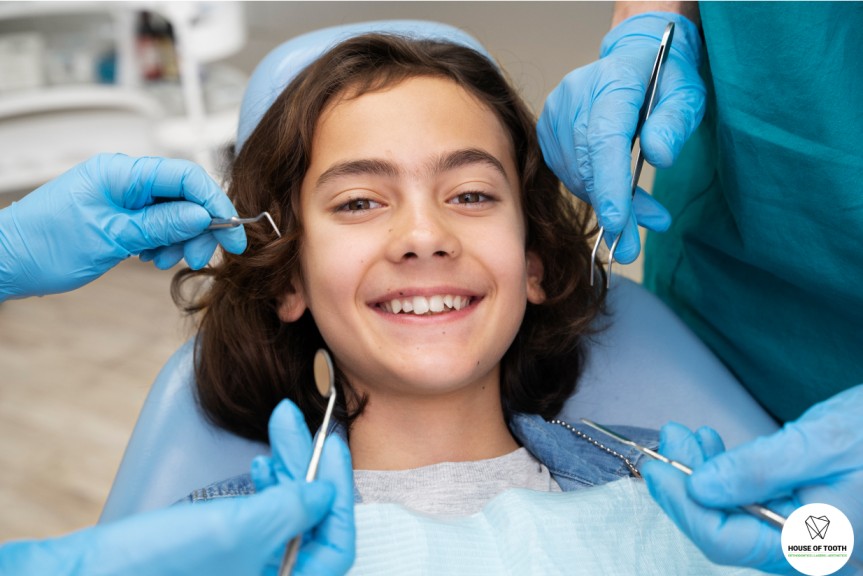
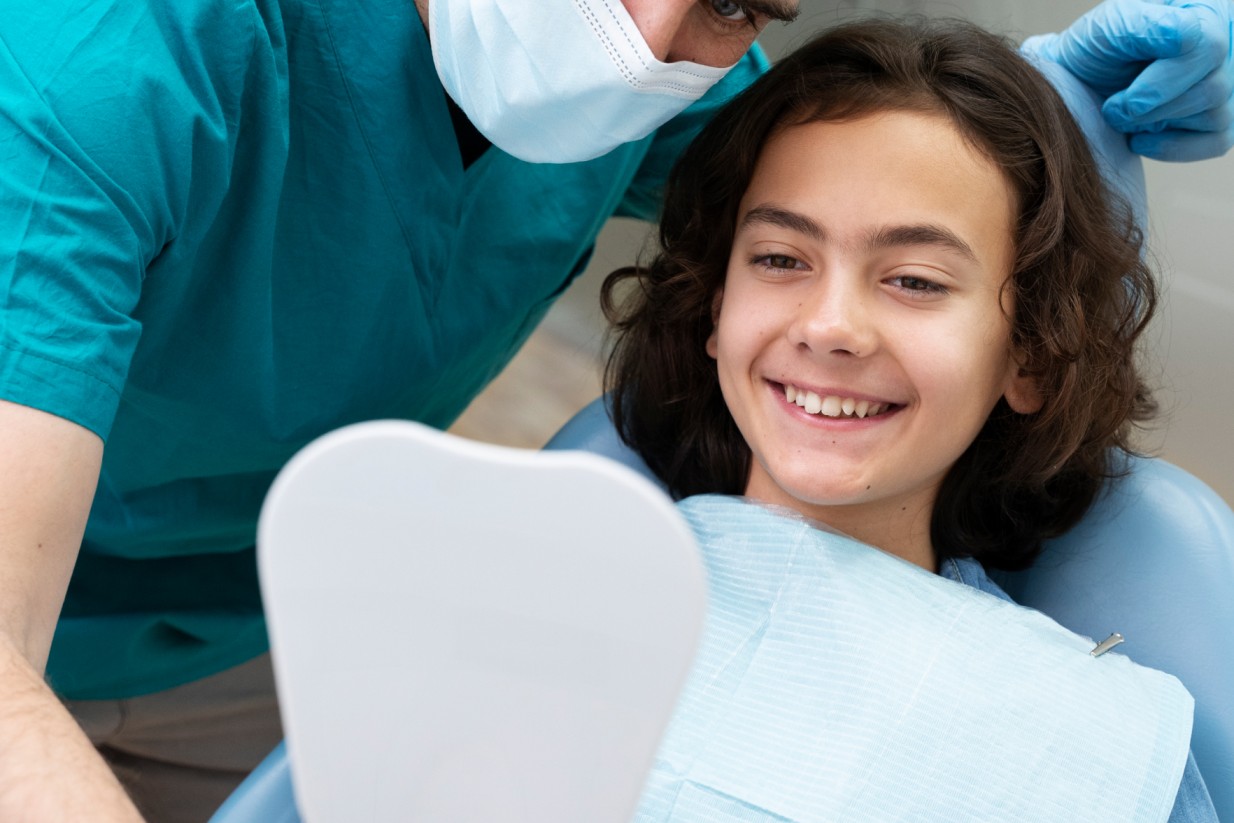
Smiling child in the dental chair at House of Tooth, Baner

See the difference

Real results, real patients
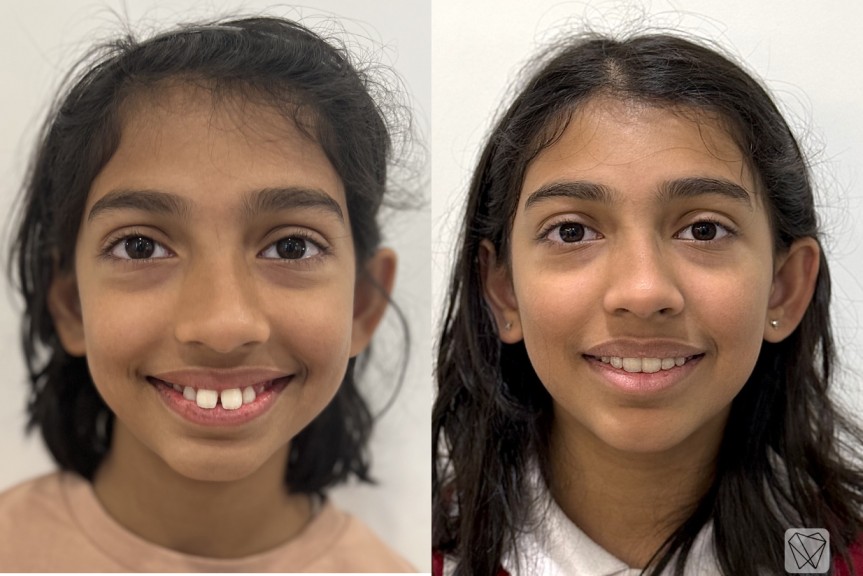
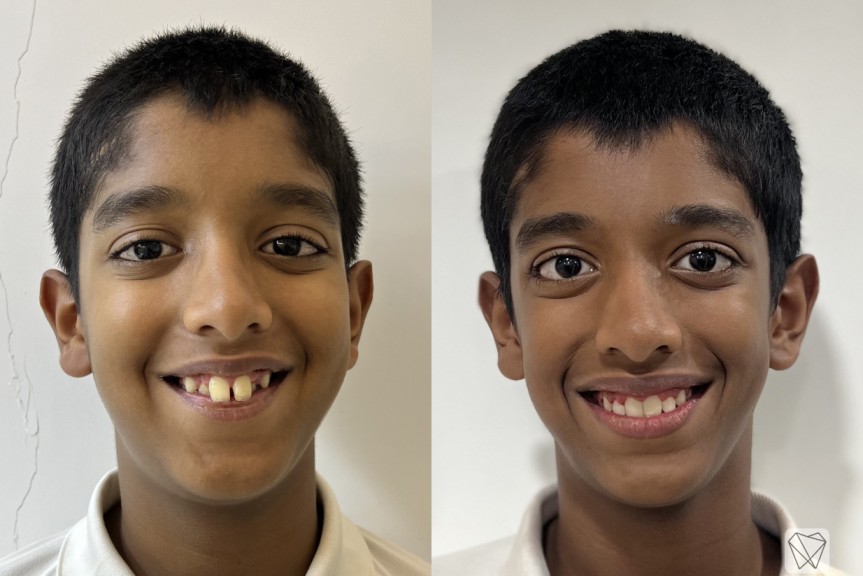
Before and after: 11-year-old's crowded teeth aligned with Invisalign at House of Tooth

Age 11: crowded teeth aligned with clear aligners in 10 months

Before (left) and after (right).

For parents

When should my child first see a dentist?

By the first birthday, or within six months of the first tooth coming through. The first visit is short and gentle: a check of the teeth and gums, a look at how the jaws and bite are developing, and advice for you on brushing, diet, teething and habits such as thumb sucking or bottle feeding.

Around age 7, an orthodontic check shows whether the jaws are growing well. Most children need no treatment then, but a few problems are much easier to correct while a child is still growing.

What we do for children

Dental care from first tooth to teenage years

Most of children’s dentistry is prevention: catching small problems early and building good habits at home.

Check-ups and cleaning

Regular visits to spot decay early, keep teeth and gums clean and watch how the teeth and jaws develop.

Fluoride and sealants

Fluoride applications and sealants on the back teeth strengthen enamel and help protect against cavities.

Fillings for baby teeth

Small cavities are treated before they become painful, so the tooth can hold space for the adult tooth. Why fill a baby tooth?

Early orthodontics

Checks from age 7, jaw expanders and braces or clear aligners when they are needed. Braces for children

A calm first experience

How we help children feel at ease

Our approach

  • The first visit is often just for getting familiar: meeting the dentist, sitting in the chair, seeing the instruments
  • Tell–Show–Do: we explain, then show, then do, in words your child understands
  • No force and no pressure; if your child is uneasy, we pause
  • Praise and encouragement for every brave step
  • Parents are kept involved throughout

Good to know

  • Digital scans instead of messy impression trays where possible
  • Laser-assisted treatment where suitable
  • For complex treatment, a trained pediatric dentist is involved
  • Baby teeth matter: they help chewing and speech and hold space for adult teeth

Your child’s visit

What happens, step by step

Step 1

Getting comfortable

Your child meets the dentist and gets to know the room, the chair and the instruments at their own pace.

Step 2

Gentle check-up

We check the teeth and gums and look at how the jaws and bite are growing.

Step 3

Advice for parents

Brushing technique, toothpaste, diet, teething and habits such as thumb sucking, explained simply.

Step 4

Treatment when ready

If treatment is needed, we plan it for when your child is relaxed, often at the next visit.

Real results

Children treated at House of Tooth

Every child is different, so we plan each visit around your child’s needs and comfort.
Children treated at House of Tooth: Young child · tooth pain and fear

Young child · tooth pain and fear

Early decay treated gently; the child left smiling and happy to come back.

Children treated at House of Tooth: Child, 11 · forward teeth, narrow jaw

Child, 11 · forward teeth, narrow jaw

Upper jaw widened first, then aligned with self-ligating braces.

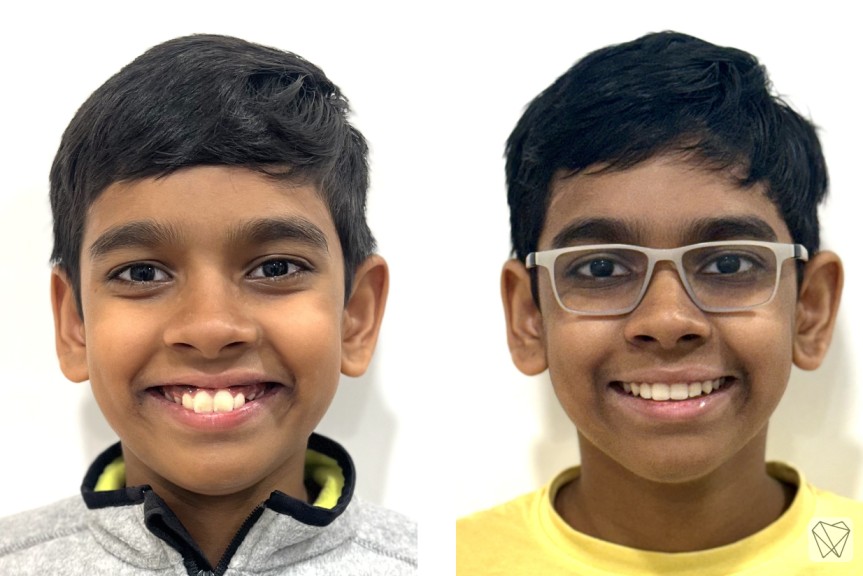
Children treated at House of Tooth: Child, 12 · crowding

Child, 12 · crowding

Teeth aligned with clear aligners instead of braces.

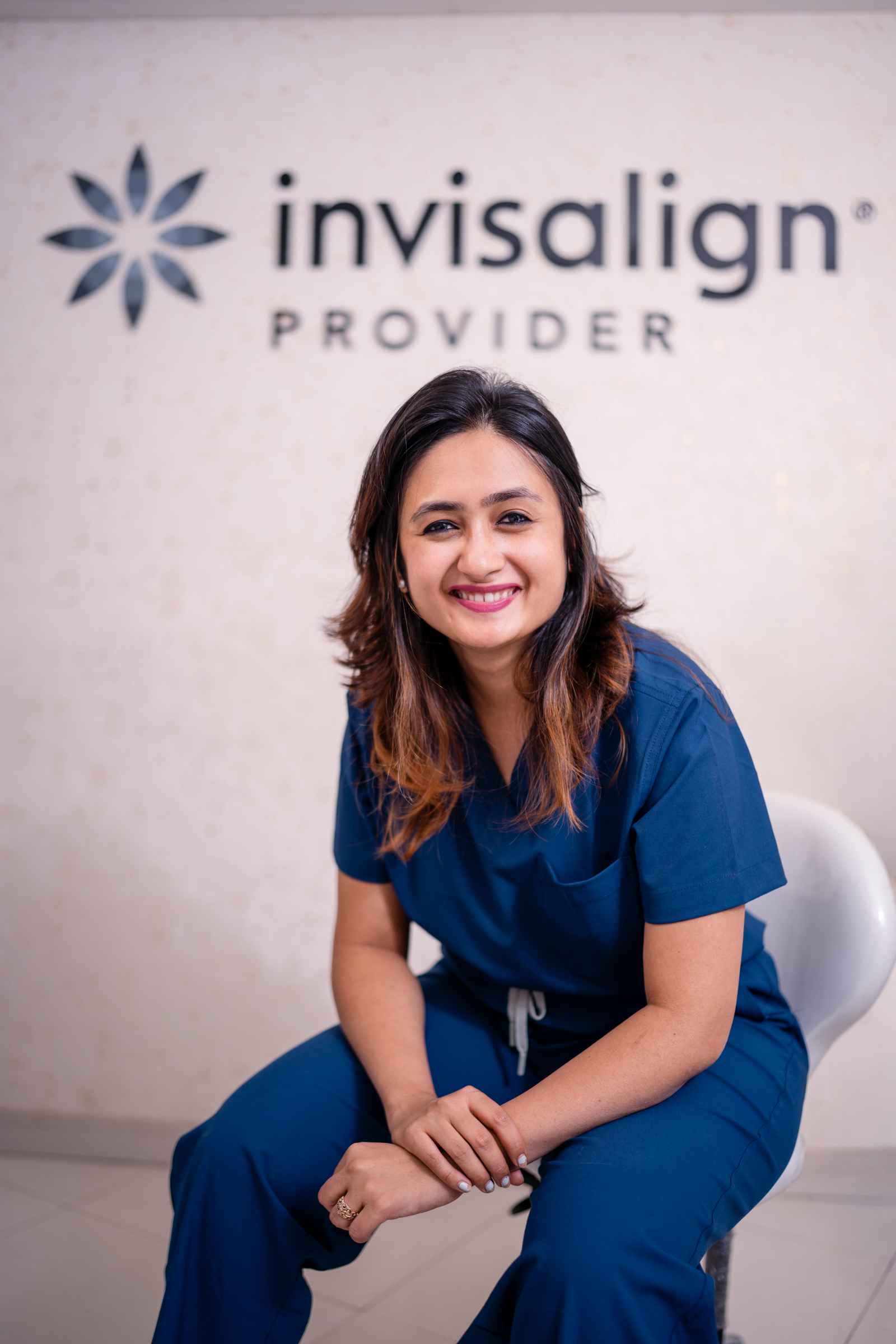
Dr. Bhakti Halapanavar, House of Tooth, Baner

Your doctor

Dr. Bhakti Halapanavar

BDS, MDS (Orthodontics & Dentofacial Orthopedics) · Gold medalist · Invisalign-certified orthodontist

Dr. Bhakti is known for making young patients feel at ease, and looks after how children’s teeth and jaws grow, from the first check-up to early orthodontic treatment. For complex children’s treatment, a trained pediatric dentist is involved.

At home

Children’s teeth: do’s and don’ts

Do

  • Brush twice a day, morning and night, for two minutes
  • Use a soft toothbrush and a pea-sized amount of fluoride toothpaste from age 2
  • Help and supervise brushing until your child can do it well
  • Give water instead of juice or fizzy drinks
  • Rinse with water after sweets
  • Book the first dental visit by the first birthday
  • Come in for regular check-ups

Don’t

  • Don’t put your child to sleep with a bottle of milk or juice
  • Don’t allow sweets and snacks all through the day
  • Don’t ignore white, yellow or brown spots on the teeth
  • Don’t assume baby teeth don’t matter because they will fall out
  • Don’t use the dentist as a threat or talk about injections and pain
  • Don’t wait for pain before the first visit

Questions patients ask

Children’s dentistry FAQs

By the first birthday, or within six months of the first tooth coming through. Early visits help spot decay, check how the jaws are developing and make your child comfortable with the clinic. Your child’s first visit
It is short and gentle. We check the teeth and gums, look at the bite and jaw development, and give you advice on brushing, diet, teething and habits. Often the first visit is just for getting familiar, with any treatment planned for the next visit.
We never rush or force a child. We use Tell–Show–Do, explain everything in simple words and praise every step. If your child is uneasy, we pause and make it a getting-to-know-you visit. A fear-free case
Often yes. Baby teeth help children chew and speak and hold space for the adult teeth. A cavity does not heal by itself, and treating it early prevents pain, infection and early tooth loss. Fillings for baby teeth
We use gentle techniques and take time to keep your child relaxed and comfortable throughout. Where suitable, laser-assisted treatment can make procedures gentler.
White, yellow or brown spots on the teeth, sensitivity while eating or drinking, and complaints of pain. Frequent sweets, irregular brushing and sleeping with a milk or juice bottle increase the risk. Tooth decay in children
A soft toothbrush with a pea-sized amount of fluoride toothpaste for children over 2, and a non-fluoride toothpaste below 2. Supervise brushing, twice a day for two minutes. Daily habits for kids
Fluoride applied at the clinic strengthens the enamel. Sealants are a thin protective coating on the grooves of the back teeth, where food and bacteria collect. Both help prevent cavities.
Around age 7. Most children need no treatment then, but a narrow upper jaw or a lower jaw that sits ahead of the upper is much easier to correct while a child is growing. Why age 7 matters
Choose a day and time in the calendar below, or WhatsApp or call us. Tell us your child’s age and any worries, and we will plan a calm first visit.

Book your consultation

Book your child’s dental visit

Choose a day and time that suits you. We will check your child’s teeth gently and answer your questions. Prefer to talk first? WhatsApp or call us.

Loading available times…